Village Hall
Governance and Policies
Information about governance of the village hall
Committee
- Mike Jones – Chairman and an elected member
- Dee Davenport – Secretary and an elected member
- Keith Reeves – Treasurer and an elected member
- Anne Woodcock – Booking Secretary, and Representative member for the Methodist Church
- Joyce Ulyatt – Representative member for Gardening Club
- Pauline Goodey – Representative member for Sheldon Field
- Bill Hill – Representative member for Newsletter
- David Crawley – Co-opted member
- David Brown – Co-opted member
- Isabel Smith – Co-opted member
- Inez Morris – Co-opted member
- Glenda Walker – Co-opted member
- Peter Evans was appointed the Accounts Examiner for 2022 / 2023
The Committee constantly strives not only to fulfill its Constitutional duties but also to promote the Hall as an important institution in the community.
If the village hall should fail there is nothing to fill its place as a centre for recreation and communal activity. For this reason, the Committee runs popular events not only to keep the finances healthy but to provide excellent entertainment.
This requires a lot of hard work which the committee undertakes with great energy and enthusiasm.
Constitution
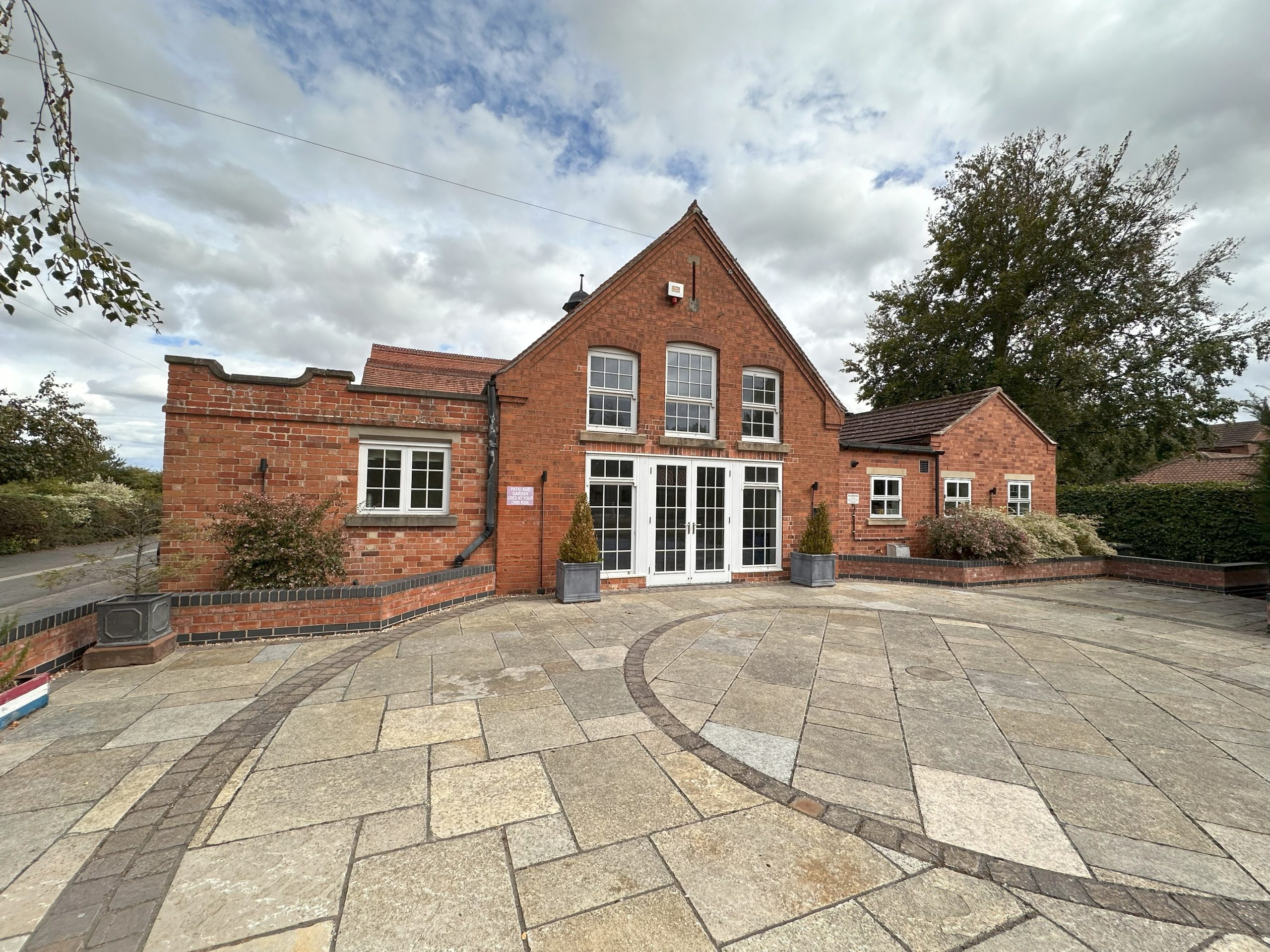
A conveyance was signed on 27th May, 1971 transferring the ownership of the former school, now called the Trust property, to the Parish Council (on behalf of the inhabitants of Cropwell Butler). A schedule attached to the conveyance set out the Constitution of a Charity for the Village Hall whose Committee of Management were to be the Charity Trustees. The Registered Charity number is 52207.
The village hall is therefore managed according to the provisions of a formal Constitution, the principal requirements of which are:
- The village hall is to be used for all forms of recreation and leisure-time occupation for improving the lives of the inhabitants
- A Committee of Management is to be constituted and its members are to be the Charity Trustees
- The Parish Council is the Custodian Trustee, which is taken to mean that, should it not be possible to form a Management Committee the responsibility for the Village Hall would revert to the Parish Council
- The composition of the Management Committee is to be a maximum of 6 elected members, 8 representative members, and 6 co-opted members
- Every member must sign a declaration of willingness to serve as a trustee of the charity
- Representative members are nominated by village institutions and organisations
- There is to be an Annual General Meeting and at least two other general meetings in each year.
- The practice is to hold at least 10 general meetings each year. All inhabitants over 18 may vote at the AGM
- The Committee elects four officers from its members, a chairman, secretary, treasurer and booking secretary, and an external examiner of the annual accounts.
- A Chairman must be elected, and a Vice Chairman may be elected
- The Committee is to ensure the property is kept insured and in good repair
- Any money surplus to the requirements for good repair may only be used for the purposes of the charity, which prohibits the Committee from making donations or the like to other charities or good causes
- The Committee may accept gifts, donations or endowments providing they are consistent with the provisions of the Constitution
- There are provisions for the sale or letting of the property but only (a) with the approval of a public meeting, (b) the approval of the Charities Commission or Secretary of State, and (c) if the funds arising are applied for the benefit of the inhabitants of the village
- There are further details of the requirements to keep minutes and accounts, and that annual reports are sent to the Charities Commission and to the Parish Council
- The committee members must have no financial interest relating to the Village Hall
Management
The management of the hall reflects the requirements of the Constitution. The means of establishing a Committee begins at an Annual General Meeting which is held each year at the end of April or early May.
Its purposes are to receive and approve the previous year’s annual accounts, the Chairman and Secretary’s joint report, and to elect 6 members and the Examiner to serve for the following year, and to deal with any extraordinary items.
Thereafter at the first committee meeting (which is usually held immediately after the AGM), the chairman and officers are appointed by the elected members, and the representative and any co-opted members formally join the committee. The Committee is now formed and empowered to carry out its duties.
The committee’s prime duty is to fulfill its requirement to keep the hall in good repair. There is, therefore, an ongoing programme of maintenance and improvement of the hall. Such a programme has two elements:
- Routine care including insurance, safety, heating, meeting statutory obligations, cleaning, decoration and maintenance of equipment and services.
- Major projects to undertake significant improvements to make good wear and tear, to enhance the fabric of the hall or its facilities, or to meet new imposed standards.
Finance
The ability of the committee to meet its obligations depends on the money it can raise. The normal cost of routine care is about £9,000 per annum. Income to meet these outgoings arises from lettings and from its own money raising activities. Of these, Letting income has risen to over 80% of the budgeted receipts. Money raising activities and a small occasional grant provide the remainder.
Money to undertake major projects may arise from the Committee’s reserves, if any, or a major drive by the Committee, grants for which the Parish Council continues to be supportive and from others, such as government or others in the charity support business, and occasionally a bequest from a generous benefactor. Of these sources, the Committee has been effective for a number of years in raising and managing its resources.